
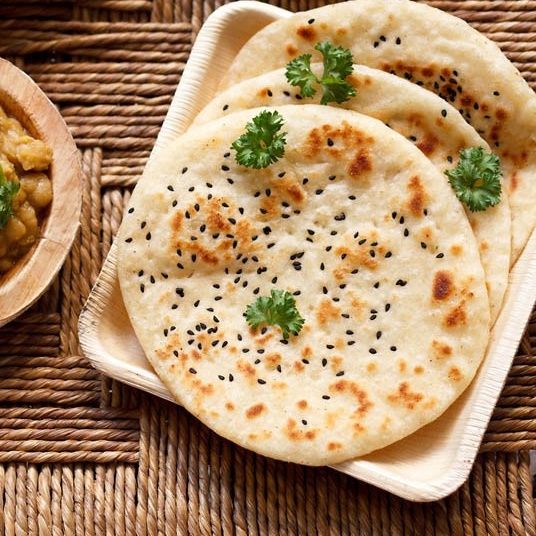
Kulcha is a soft, leavened North-Indian flatbread made from all-purpose flour (maida), yogurt and leavening agents. It can be plain or stuffed (aloo/paneer/etc.), cooked on a hot tawa, baked in an oven or finished in a tandoor. Popular with chole (spicy chickpea curry), kulcha is known for its slightly thick, fluffy texture and golden spots when perfectly cooked. This page gives a simple dough method, stovetop and oven options, plus Amritsari, matar & stuffed variations.
Our Other Recipes
Ingredients
- All-purpose flour (maida) — 2½ cups (≈ 320–350 g).
- Salt — ¾ teaspoon.
- Sugar — 2–2½ teaspoons (helps leavening).
- Baking powder — ½ teaspoon; baking soda — ¼ teaspoon (or use active dry yeast 1 tsp as alternate).
- Yogurt (curd) — 4 tablespoons (helps softness & flavour).
- Oil / ghee — 2½ tablespoons in dough + extra for cooking.
- Water — ~¾ cup (adjust to form soft pliable dough).
- Toppings/seeds (optional) — nigella (kalonji) seeds or sesame seeds.
Optional stuffing & add-ins (for stuffed / matar / nutri versions):
Boiled mashed potato (for aloo/Amritsari style), spiced peas (for matar kulcha), grated paneer, mixed nuts & seeds (for nutri kulcha). (See each variation below.)
Amritsari Kulcha Recipe
What Makes Amritsari Kulcha Special
Amritsari kulcha is typically fluffy and often stuffed (classic is aloo/mashed potato or paneer) and known for its charred, slightly smoky finish when made in a tandoor or on a very hot skillet. The dough base is similar to plain kulcha but stuffing and finishing differentiate the style.
Quick Stuffed Aloo Method (Stepwise)
- Prepare dough using master ingredients above; let it rest/leaven ~2 hours at room temperature.
- For stuffing: boil & mash 2 medium potatoes; mix with roasted cumin, chopped coriander, salt, mild chaat masala and a pinch of red chilli. Make small stuffing balls.
- Roll dough into small discs, stuff with potato mix, seal and roll gently (not too thin). Cook on hot tawa with a little ghee/oil; finish on open flame or under grill for char (optional). Serve hot with chole.
Tips To Get A Fluffy, Non-Leaking Stuffed Kulcha
- Seal edges tightly and dust lightly while rolling so stuffing does not burst.
- Keep kulcha thickness medium — too thin → stuffing bursts; too thick → undercooked centre.
- Cook on a very hot tawa; apply ghee and flip often for even golden spots.
Matar Kulcha Recipe
What Is Matar Kulcha (The Classic Pairing)
Matar kulcha refers to the popular Delhi/Amritsar combo of kulcha served with matar (white peas) curry — the kulcha itself can be plain or slightly enriched with milk/ghee for softness. VegRecipes highlights this pairing as a classic and widely loved combination.
Quick Idea For Matar Stuffing & Serving
- For a matar-style stuffed kulcha, lightly mash cooked white peas with onion, garam masala and coriander; use as stuffing or simply serve plain kulcha with a robust matar curry. The latter is the traditional street-food presentation.
Serving & Regional Note
- Serve hot kulchas with butter, chole/matar curry, pickle and raw onion. States across North India (Punjab, Delhi) claim regional variations — using milk in dough (doodhia kulcha) or finishing in tandoor produces different textures.
Nutri Kulcha Recipe
What Is Nutri Kulcha & Why Include It
Nutri kulcha is a higher-nutrient take: add seeds, millets or nuts into the dough or stuffing to boost fibre, protein and micronutrients — a useful twist for readers wanting healthier breads without losing the kulcha experience. This is a practical addition building on plain kulcha dough.
Simple Nutri Dough Modification (Mix-In Method)
- To the basic dough add 2–3 tbsp mixed toasted seeds (sesame, flax, sunflower) or 30–40 g coarsely ground millet/wheat germ. Knead well; rest and cook as usual. These inclusions change texture slightly but add nutrition and crunch. (Keep water slightly higher when adding dry mix-ins.)
Stuffed Nutri Kulcha Idea (Nuts + Paneer)
Mix grated paneer with chopped toasted nuts, mild spices and coriander. Use as stuffing and follow the same sealed-roll method. The result is protein-rich, flavorful kulcha good for brunches.
Stuffed Kulcha Recipe
Popular Stuffing Options (Tried & Trusted)
- Aloo (potato) — classic Amritsari style.
- Paneer (cottage cheese) — spiced paneer stuffing.
- Keema / mixed veg — alternative fillings (if vegetarian, use spiced sautéed veggies). These variants are listed and demonstrated in the source recipes.
Step-By-Step For Perfect Stuffed Kulcha
- Divide dough into equal balls; flatten, add stuffing, seal and roll gently.
- Cook on a hot tawa; apply ghee/oil and press slightly with spatula for even contact. Flip and cook both sides till golden spots appear. Optionally finish on open flame or under a hot grill for char.
Avoid Soggy Stuffing & Leakage
- Use drier stuffing (drain excess moisture from vegetables) and allow stuffing to cool a bit before encasing. Roll gently to avoid piercing the dough.
Benefits
Comforting & Versatile Bread
Kulcha pairs well with curries, chutneys and salads; it’s a filling option for breakfast, lunch or dinner.
Easy To Adapt (Stuffings & Nutrition)
The same dough accepts a wide range of stuffings — potatoes, paneer, peas, nuts — making it easy to adapt for vegetarian, higher-protein or whole-grain variants.
Good For Batch Cooking & Hosting
Make dough in advance, refrigerate/retain, and cook kulchas fresh when needed — a convenient hosting strategy favored by home cooks. Rak’s Kitchen and VegRecipes both note dough can be prepared a day ahead.
Process
- Mix dry: In a bowl combine maida, salt, sugar, baking powder and baking soda.
- Add wet: Add yogurt, oil and water; knead to a soft, slightly sticky dough. Add more water or flour as needed.
- Rest: Cover and let dough rest in a warm place ~2 hours (until slightly puffed). Rak’s Kitchen suggests similar resting to relax gluten.
- Divide & roll: Make equal balls, roll to medium thickness (slightly thicker than a chapati). If stuffing, add filling and seal before rolling gently.
- Cook: Heat tawa to high; cook kulcha partially on one side, flip and apply ghee/oil; roast till golden spots appear. Finish on open flame or in oven if desired.
Oven / Tandoor Options & Quick Finishes
- Oven: Preheat to 220–250°C; place rolled kulchas on baking tray and bake 4–6 minutes until puffed and golden; brush with butter/ghee after baking. (VegRecipes notes oven is a valid cook method.)
- Tandoor / open flame: Finishes give authentic char & smoky flavour — Rak’s Kitchen and VegRecipes reference tandoor/finishing options.
Quick Fixes
- Dough too sticky → add a little flour and knead; rest to hydrate.
- Kulcha not puffing → dough may be under-rested or tawa not hot enough; increase heat slightly.
- Stuffing leaking → stuffing too wet or edges not sealed properly—drain or dry stuffing and reseal. (Sources emphasize dough texture and sealing as keys.)
Storage & Reheating
Store cooked kulchas in an airtight box for same-day use (vegRecipes recommends refrigeration only if necessary; best eaten fresh). To reheat, warm on tawa with a little ghee or microwave briefly and then roast on tawa for crisp edges.
Additional
- Nutrition snapshot (calories & protein per plain kulcha) — add a small table so health-minded users get quick guidance (you can compute using standard food composition databases).
- Printable recipe card + step photos placed at top for quick access — Dassana’s long page is great but a compact card benefits impatient users.
- Mini video clip or GIF for sealing & rolling stuffed kulcha — many users struggle with sealing; a short visual helps reduce leakage mistakes (Rak’s and VegRecipes have photo steps — adding a short video will stand out).
Conclusion
Kulcha is an easy, crowd-pleasing North Indian bread that’s simple to make at home with basic pantry ingredients. Use the master dough for plain or stuffed kulchas, try the Amritsari aloo stuffing for classic street-food vibes, or boost nutrition with nutri kulcha variations. Follow the tips above for soft, fluffy kulchas every time — and don’t forget the hot chole, a smear of butter and a plate of sliced onions on the side. Happy cooking from HMDishDelights!
FAQ
How can I make kulcha soft and fluffy at home?
To make soft kulcha, keep the dough slightly sticky, rest it for at least 1–2 hours, and cook on medium heat. Adding curd and a little baking soda helps improve texture.
2. Why does kulcha become hard after cooling?
Kulcha becomes hard if the dough wasn’t rested enough, if too much flour was added during rolling, or if it was cooked on very high heat. Storing in a covered container keeps it soft longer.
3. Can I make kulcha without yeast?
Yes. Most Indian kulcha recipes use curd, baking soda, and baking powder instead of yeast. This gives a soft, fluffy texture similar to yeast-based bread.
4. What is the difference between naan and kulcha?
Naan is typically made with yeast and cooked in a tandoor. Kulcha is made with curd and leavening agents and can be cooked on a tawa or tandoor. Kulcha is slightly denser than naan.
5. Can I make kulcha with whole wheat flour?
Yes, you can replace maida with whole wheat flour, but the kulcha may be slightly denser. Adding 1–2 tbsp curd helps keep the texture soft.
6. What can I stuff inside a stuffed kulcha?
Popular fillings include spiced potatoes, paneer, onion mix, cauliflower, cheese, and peas. Make sure the filling is dry and mashed to avoid breaking.
7. How long should kulcha dough rest?
A minimum of 1 hour is recommended. Resting allows gluten to relax and helps the kulcha puff and remain soft.
8. Can I cook kulcha without tandoor?
Yes. Kulcha can be cooked on a tawa, oven, or even an air fryer. Tawa cooking with water brushing gives a tandoor-like texture.
9. What to serve with kulcha?
Kulcha pairs well with chole, matar curry, paneer gravy, rajma, dal makhani, and pickles. Amritsari kulcha is traditionally served with chole.
10. Can kulcha dough be stored in the fridge?
Yes. Kulcha dough stays good for 24 hours when refrigerated in an airtight container. Bring it to room temperature before rolling.
